
How to Tell If a Downspout Is Clogged
A downspout is clogged when water can’t get from the gutter to the ground. The giveaways: water overflowing from the gutter right above the downspout outlet, little or no water exiting the bottom during rain, water pooling at the foundation directly below, plants growing out of the downspout opening, or drips at the elbow seams. In Roseville, Liquid Amber seed balls are the number-one cause — they’re exactly the right size to wedge into a standard downspout outlet.
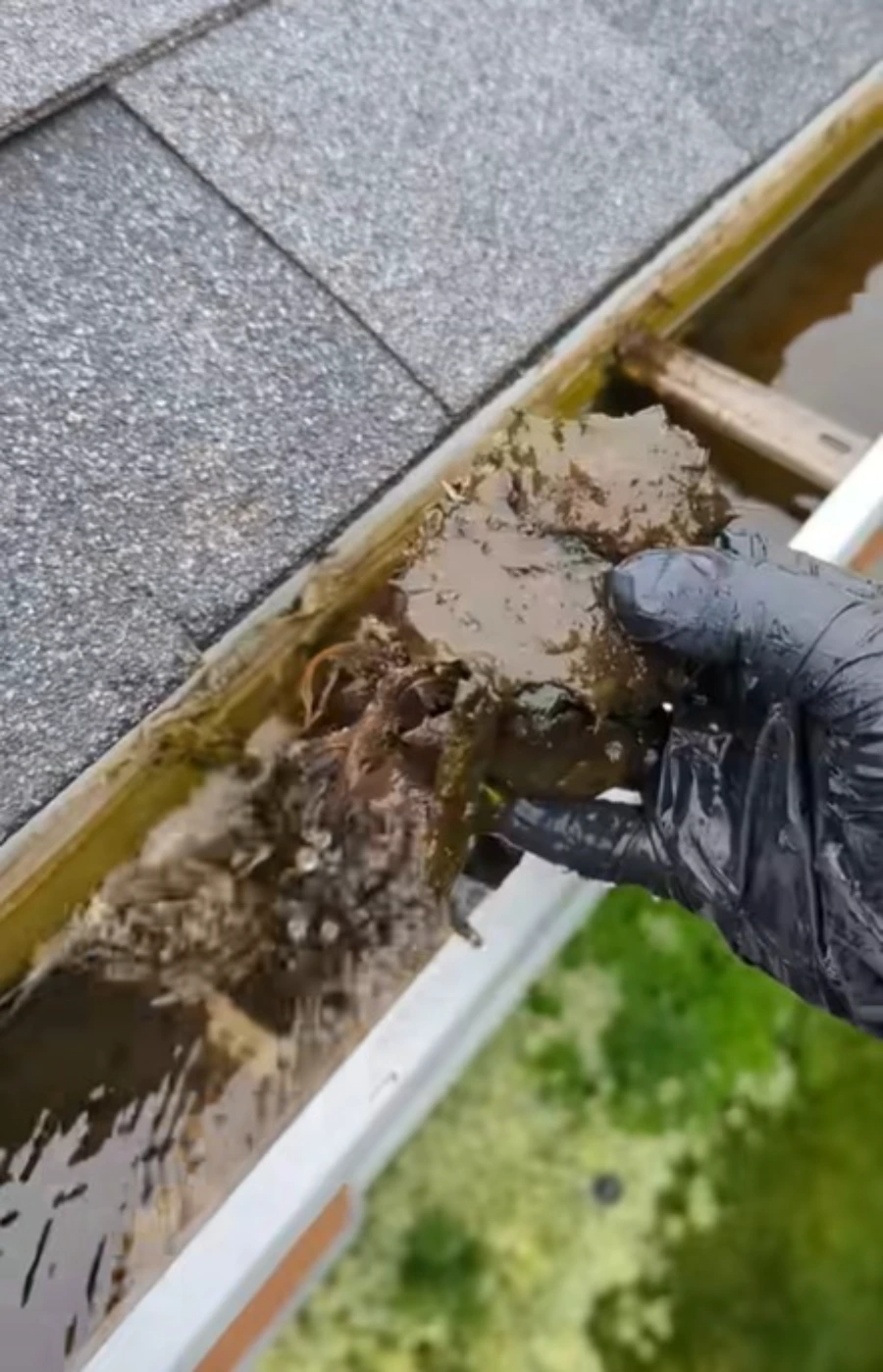
Your gutters can be spotless and still fail if the downspouts are blocked. Downspouts are the system’s only exit, and in Roseville they clog more often than most homeowners expect — sweetgum seed balls, Valley Oak catkins, and pine needles all find their way in. The good news: a clogged downspout announces itself clearly if you know what to look for. Here are the five signs, plus three simple tests to confirm.
1. Water Overflows Right Above the Downspout
When a downspout is blocked, the gutter fills from the bottom up — and the first place it spills is directly above the blockage. If you see water sheeting over the gutter edge right where the downspout connects, while the rest of the run looks calm, the outlet or elbow is almost certainly plugged. This is the most common pattern after fall seed-ball drop in neighborhoods with street-tree sweetgums: Westpark, Woodcreek Oaks, and Stanford Ranch especially.
2. No Flow (or Just a Trickle) During Rain
Stand outside during a decent rain and watch each downspout’s ground outlet. A clear downspout discharges a strong, continuous stream; a clogged one drips, trickles, or stays dry even while the gutter above is brimming. Compare outlets against each other — if three are gushing and one is silent, you’ve found your clog. One caveat: if your downspout ties into an underground drain, you won’t see the exit — watch the gutter above instead.
3. Water Pooling at the Foundation Below
A blocked downspout doesn’t just stop water from draining — it relocates the problem. Water that can’t exit at the ground outlet backs up and spills over the gutter edge, landing in a concentrated stream right at the foundation below. On Roseville’s clay soils, which barely absorb water, that pooling sits against the slab or crawlspace wall instead of soaking away. If you see a soggy patch or an erosion crater at the base of a downspout after rain, check whether that downspout is actually flowing.
4. Plants Growing Out of the Downspout
If grass or seedlings are sprouting from the top of a downspout where it meets the gutter, the downspout has been blocked long enough to become a planter. Valley Oak acorns and sweetgum seeds carried into the outlet germinate in the trapped debris — especially in Roseville’s warm springs. Visible growth means the blockage is old, compacted, and unlikely to flush out on its own.
5. Drips and Leaks at the Elbow Seams
Downspout elbows are joined, not welded. Under normal flow those joints stay dry — but when a clog pressurizes the downspout, with water stacking up behind the blockage, it forces water out through every seam and screw hole. If an elbow drips during rain while the gutter above isn’t overflowing yet, you’re catching a partial blockage early. That’s the cheapest time to fix it.
How to Confirm a Downspout Clog: Three Simple Tests
See one of the signs above? Confirm it before you call:
- The rain test. During rain, compare flow at every downspout outlet. The quiet one is the clogged one.
- The tap test. When dry, tap the downspout from bottom to top with your knuckle. A clear downspout rings hollow; a clogged section sounds dull and solid where debris is packed.
- The hose test. With a helper watching the top, run a hose into the downspout from the bottom. If water backs up and overflows the gutter instead of flowing through, the blockage is confirmed — stop the hose to avoid flooding the fascia.
Don’t disassemble downspouts from a ladder or force a pressure washer down the spout — you can split seams or flood the wall cavity. Leave clearing to a professional.
When to Call a Professional
A confirmed clog is a quick professional fix: open the elbow, snake or flush the blockage, and flow-test every downspout. It’s included in every professional gutter cleaning in Roseville ($149–$449 — see current gutter cleaning costs), along with a check that the underground drain, if you have one, is actually carrying water away. If the same downspout keeps clogging, the outlet may need upsizing to 3×4-inch or a leaf strainer — the local professionals we connect you with will tell you which.
Frequently Asked Questions
Can I clear a clogged downspout myself?
Sometimes — a leaf blower from the bottom or a garden hose can clear a loose clog at the elbow. But compacted seed balls and catkin plugs usually need the elbow opened and snaked. If a hose flush doesn’t restore full flow in a few minutes, stop: forcing water can pack the clog tighter or flood behind the fascia.
Why does the same downspout keep clogging?
Usually one of three reasons: a nearby tree dropping directly into that gutter section, an undersized 2×3-inch outlet that jams easily, or a dip in the underground drain where debris settles. A professional can upsize the outlet or add a strainer to break the cycle.
Do gutter guards prevent downspout clogs?
Good micro-mesh guards keep most debris out of the trough, which prevents most downspout clogs — but fine Valley Oak pollen and shingle grit can still wash through and accumulate. Guards reduce how often it happens; they don’t eliminate maintenance.
Related guides: why gutters overflow · what causes gutters to leak · signs your gutters need cleaning
Downspout Barely Draining?
Get a diagnosis and an upfront price — most services are scheduled within the same week.