Why Is My Gutter Sagging?
Gutters sag because something is giving way under their weight: waterlogged debris overloading the hangers, hangers or spikes pulling out of the fascia, rotted fascia that can no longer hold fasteners, or hanger spacing that’s too wide for the run. In Roseville, weight is the most common story — a gutter full of wet Valley Oak debris and standing water can weigh 40–60 pounds per 20-foot section, far more than old spike-and-ferrule hangers were meant to carry indefinitely.
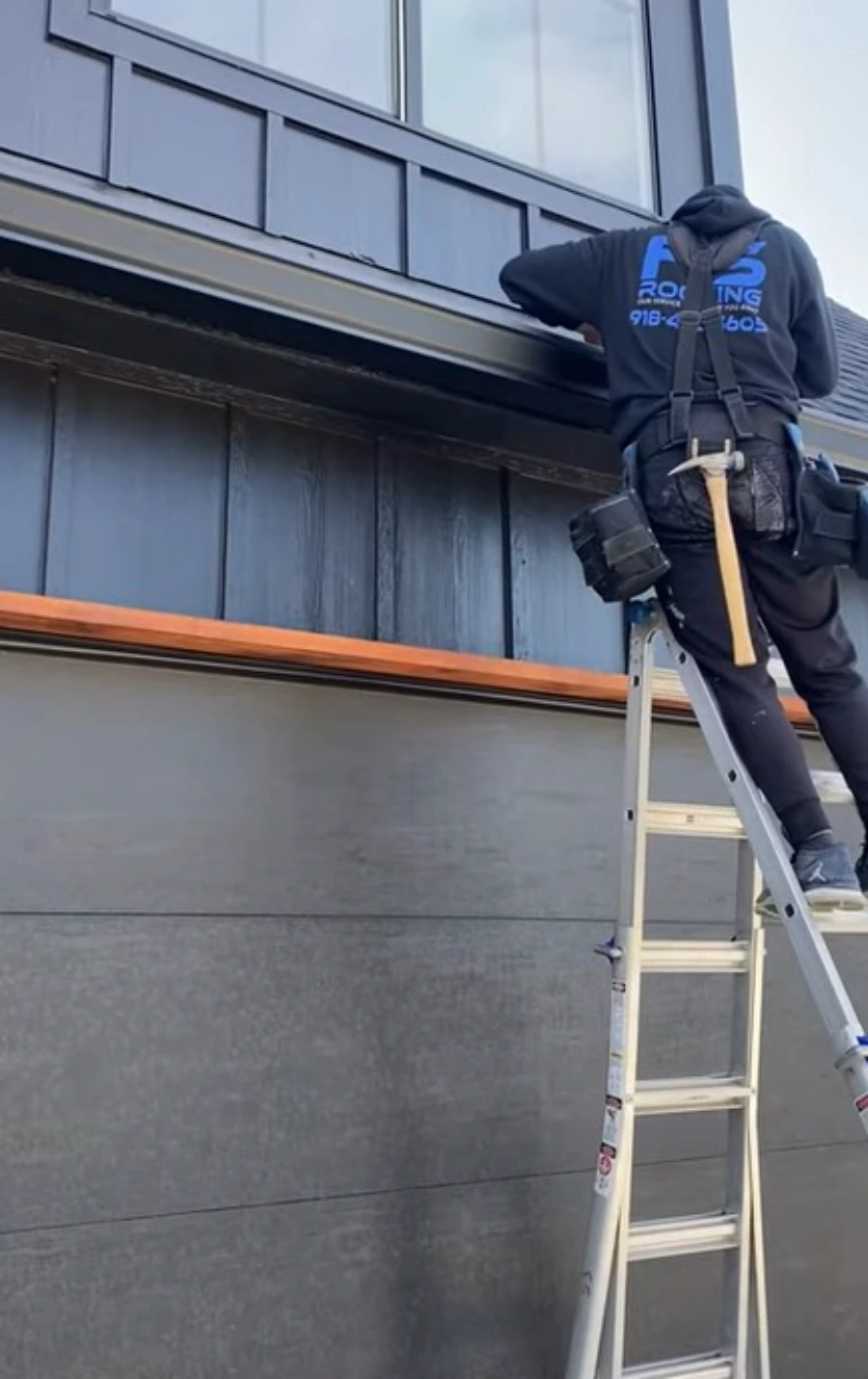
A gutter that dips in the middle or pulls away from the fascia at one end is telling you the system is overloaded or losing its grip. Sagging isn’t just cosmetic: a sagging section holds standing water, standing water adds weight and accelerates corrosion, and the extra weight pulls the gutter further from the house. Left alone, the cycle ends with the gutter tearing free. Here’s what’s behind the sag — and how to tell how serious yours is.
1. Water Weight: The Debris Load Gets Heavy
Aluminum gutters are light; what fills them is not. A 20-foot section packed with wet leaves, Valley Oak catkins, and mud can hold 40–60 pounds — and Roseville’s November–March wet season keeps that load soaked for months at a time. Standard hangers are designed to support the gutter itself plus normal water flow, not a season’s worth of saturated debris sitting in the trough. The middle of a long run sags first, because that’s where support is weakest and the load is greatest. If your gutters haven’t been cleaned in a year or more and the sag appeared gradually, weight is the prime suspect.
2. Failing Hangers and Spikes
Look at how your gutters are attached. Older Roseville homes — especially in Maidu, Diamond Oaks, and other established neighborhoods — often still have spike-and-ferrule hangers: long spikes driven through the gutter into the fascia. Decades of thermal expansion and heavy loads work those spikes loose a fraction of an inch at a time. Modern hidden bracket hangers screw into the fascia and hold far better, but even they fail if spaced too far apart or driven into soft wood. If the gutter is pulling away at the fasteners while the trough itself looks straight, the hangers — not the gutter — are the problem.
3. Fascia Rot Behind the Gutter
Sometimes the gutter is fine and the wood it’s attached to is not. When gutters overflow chronically, water runs down the back of the gutter and soaks the fascia board — and Roseville’s wet winters keep that wood damp for months. Damp wood rots, and a hanger screwed into rotted fascia has nothing to grip, so the gutter sags no matter how many new hangers you add. Press the fascia behind a sagging section (from a ladder, or have a professional check): if it feels soft or crumbles, the fascia needs repair before the gutter can be properly re-hung.
4. Hanger Spacing That’s Too Wide
On long, straight runs — common on ranch-style homes in Westpark and Sun City — hangers should sit about every 24 inches. On some older installs they’re 36 inches apart or more, and the unsupported midpoint sags under any real load. Adding hangers is a straightforward fix, but only after the underlying weight problem is solved — otherwise the new hangers just inherit the same overload and the sag returns.
How to Check Your Gutters for Sag
You can assess most sagging from the ground — no ladder needed:
- Sight along the gutter from one end. A healthy run looks straight with a barely perceptible slope toward the downspout; a sagging run shows a visible dip or wave.
- Look at the fasteners. Spikes backing out of the fascia, or a gap opening between the gutter back and the fascia board, means the attachment is failing.
- Check after rain. Sections still holding water hours later are ponding in a low spot — that standing water is both symptom and cause of the sag.
- Note where it sags. Mid-run dips point to weight or hanger spacing; pulling away at the ends points to failing fasteners or fascia rot.
Don’t pull on the gutter to test it — you can tear a weakened section free. Leave hands-on inspection to a professional with a ladder and the right safety setup.
When to Call a Professional
A sagging gutter needs a ladder — and often a fascia assessment — so this is a job for a professional. A typical visit covers a full cleaning ($149–$449 in Roseville depending on home size and stories — see current gutter cleaning costs), then re-hanging the run with new hidden-bracket hangers and re-pitching it toward the downspout. If the fascia is rotted, that gets repaired first — a re-hang without sound wood to anchor to won’t last. The gutter repair professionals we connect you with will show you the fascia condition and quote the fix upfront.
Frequently Asked Questions
Can I just push a sagging gutter back up myself?
Pushing it back without fixing the cause — weight, failed hangers, or rotted fascia — means it will sag again within weeks. Worse, forcing a weakened section can tear it free or damage the fascia further. Have the cause diagnosed first, then fix it properly.
How much does it cost to fix sagging gutters in Roseville?
Re-hanging a sagging run with new hangers typically runs $100–$250; a cleaning plus re-hang runs $250–$400. If rotted fascia must be replaced first, expect $400–$900 per section. Most gutter repairs fall in the $75–$400 range — get an upfront quote before any work begins.
Will sagging gutters eventually fall off the house?
They can. Each season of overload pulls fasteners further out, and a heavy winter storm can finish the job. A gutter that tears free can damage siding, landscaping, and anything below it — addressing a sag early is always cheaper than replacing a fallen section.
Related guides: why gutters overflow · what causes gutters to leak · gutter repair costs in Roseville
Noticed a Dip in Your Gutter Line?
Get a diagnosis and an upfront price — most services are scheduled within the same week.