
5-Inch vs. 6-Inch Gutters: Which Is Right for Your Home?
QUICK ANSWER
Most Roseville homes have 5-inch gutters, which handle typical residential roofs just fine. Choose 6-inch gutters if you have a large or steep roof, long gutter runs, or sections that overflow during valley downpours even when clean. 6-inch systems move substantially more water and cost more to install — but they’re the right call when capacity is the problem.
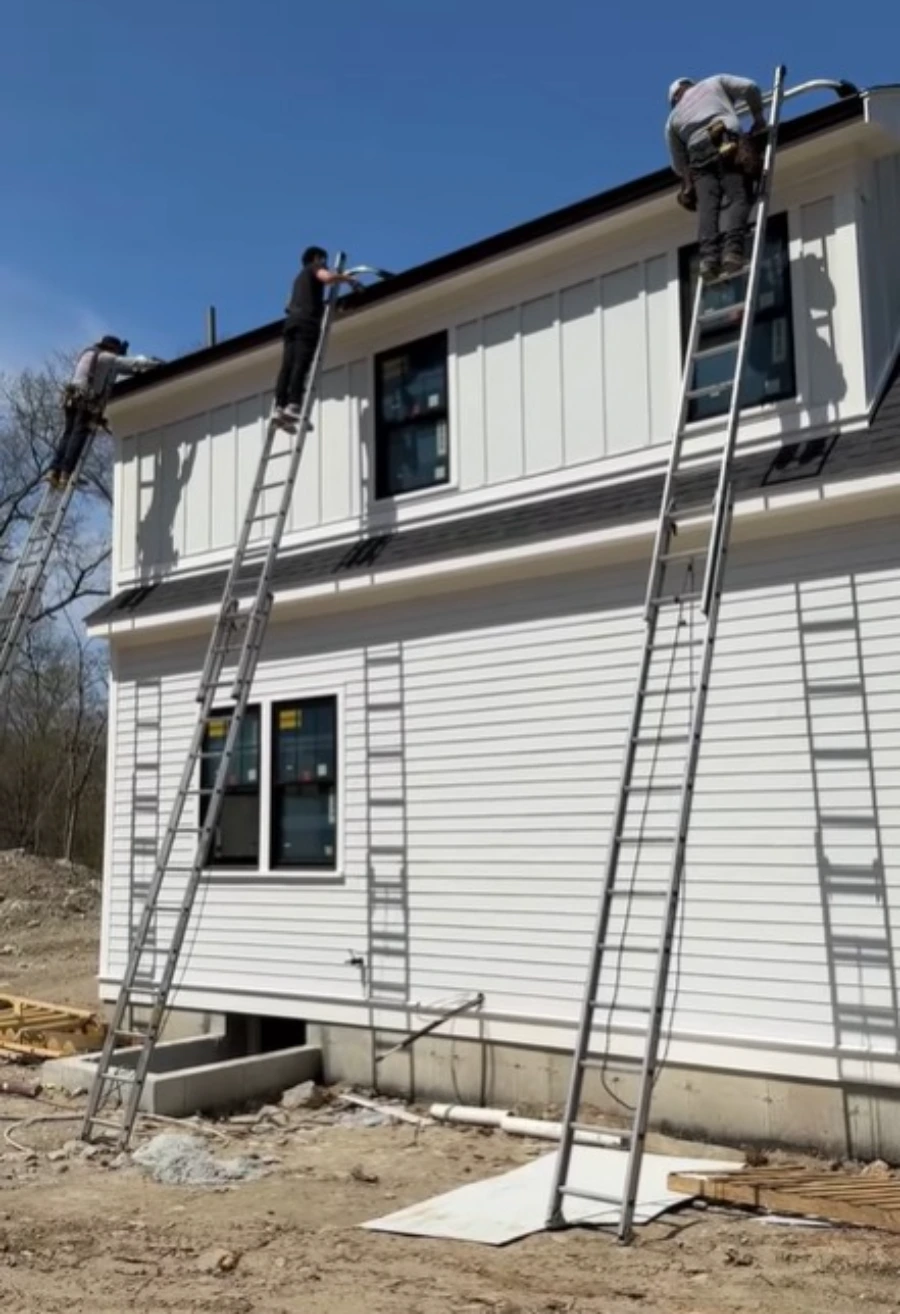
Walk through any Roseville neighborhood and you’ll see 5-inch gutters on most homes. They’re the residential standard — and for most houses, they’re enough. But Roseville’s winter downpours are real: most of our roughly 20 inches of annual rain arrives between November and March, often in intense bursts. If your gutters overflow every storm, the problem may not be debris at all — it may be capacity. Here’s how to decide between 5-inch and 6-inch gutters.
The Capacity Difference
Gutter size is measured straight across the top of the trough. A 5-inch gutter is the standard on most single-family homes — adequate for typical roof areas with properly placed downspouts. A 6-inch gutter carries substantially more water per foot — enough to make the difference during the heaviest Roseville downpours, when a 5-inch trough fills faster than its outlets can drain it.
The upgrade usually pairs with larger 3×4-inch downspouts instead of standard 2×3-inch ones. This matters: a bigger trough feeding undersized downspouts still bottlenecks at the outlet. When you step up to 6-inch gutters, step up the downspouts too.
When 6-Inch Gutters Make Sense in Roseville
- Large or steep roofs: more square footage and steeper pitch shed water into the gutter faster than a 5-inch trough can handle.
- Long gutter runs: runs over 40 feet between downspouts overwhelm 5-inch capacity during heavy rain.
- Overflow even when clean: if freshly cleaned gutters still spill over every storm, capacity — not debris — is the bottleneck.
- Tile roofs: common in Roseville, tile sheds water quickly and in volume.
- Roof valleys: valleys concentrate huge volumes of water into one gutter section; 6-inch troughs handle the surge.
- Valley downpour exposure: homes that catch the brunt of winter storm bursts need the extra margin.
When 5-Inch Gutters Are Plenty
- Smaller or single-story homes with moderate roof area
- Downspouts placed every 30–40 feet with clear flow
- No history of overflow when the gutters are clean
- Budget is the priority — 6-inch costs more per foot for materials and installation
If your 5-inch gutters only overflow when they’re full of leaves, you don’t have a size problem — you have a cleaning schedule problem.
How Much More Do 6-Inch Gutters Cost?
Expect to pay more per linear foot for 6-inch systems: larger trough material, heavier hangers, and usually 3×4-inch downspouts. For a typical Roseville home, the upgrade adds a meaningful but not dramatic premium over standard 5-inch replacement. The exact number depends on linear footage, stories, and fascia condition — see current gutter service costs in Roseville for context, and get a quote for your specific home.
How to Tell What Size You Have
Grab a tape measure and measure straight across the top of the gutter, from the outer lip to the fascia board. Five inches means 5-inch gutters; six inches means 6-inch. Also check your downspouts: standard 2×3-inch downspouts usually pair with 5-inch gutters, while oversized 3×4-inch downspouts usually pair with 6-inch systems. If you’re unsure, we check this as part of every assessment.
Can You Just Upgrade the Downspouts?
Sometimes. If your 5-inch gutters are in good shape but one section overflows, adding a downspout or upsizing to 3×4-inch downspouts can solve it for far less than full replacement. But if the trough itself can’t hold the volume — water sheeting over the front edge across a whole run — that’s a capacity problem only replacement fixes. Our repair vs. replacement guide walks through the decision, and our gutter repair cost guide covers what smaller fixes run.
Frequently Asked Questions
Will 6-inch gutters fix my overflowing gutters?
Do I need bigger downspouts with 6-inch gutters?
How much more do 6-inch gutters cost than 5-inch?
Can 6-inch gutters be installed on my existing fascia?
Can I mix 5-inch and 6-inch gutters on one home?
Overflowing Gutters? Find Out If Size Is the Problem.
We’ll check whether your gutters are undersized, clogged, or mis-pitched — and give you the honest fix. Most assessments are scheduled within the same week.
One Comment