
What Causes Gutters to Leak?
Gutters leak at their weakest points: seams where sections join, end caps, inside and outside corner miters, holes from corrosion or damage, and loose downspout joints. In Roseville, the number-one cause is failed sealant — our hot, dry summers dry out joint sealant in 5–7 years, and the first heavy winter rain finds every gap. Most leaks are inexpensive repairs if caught early.
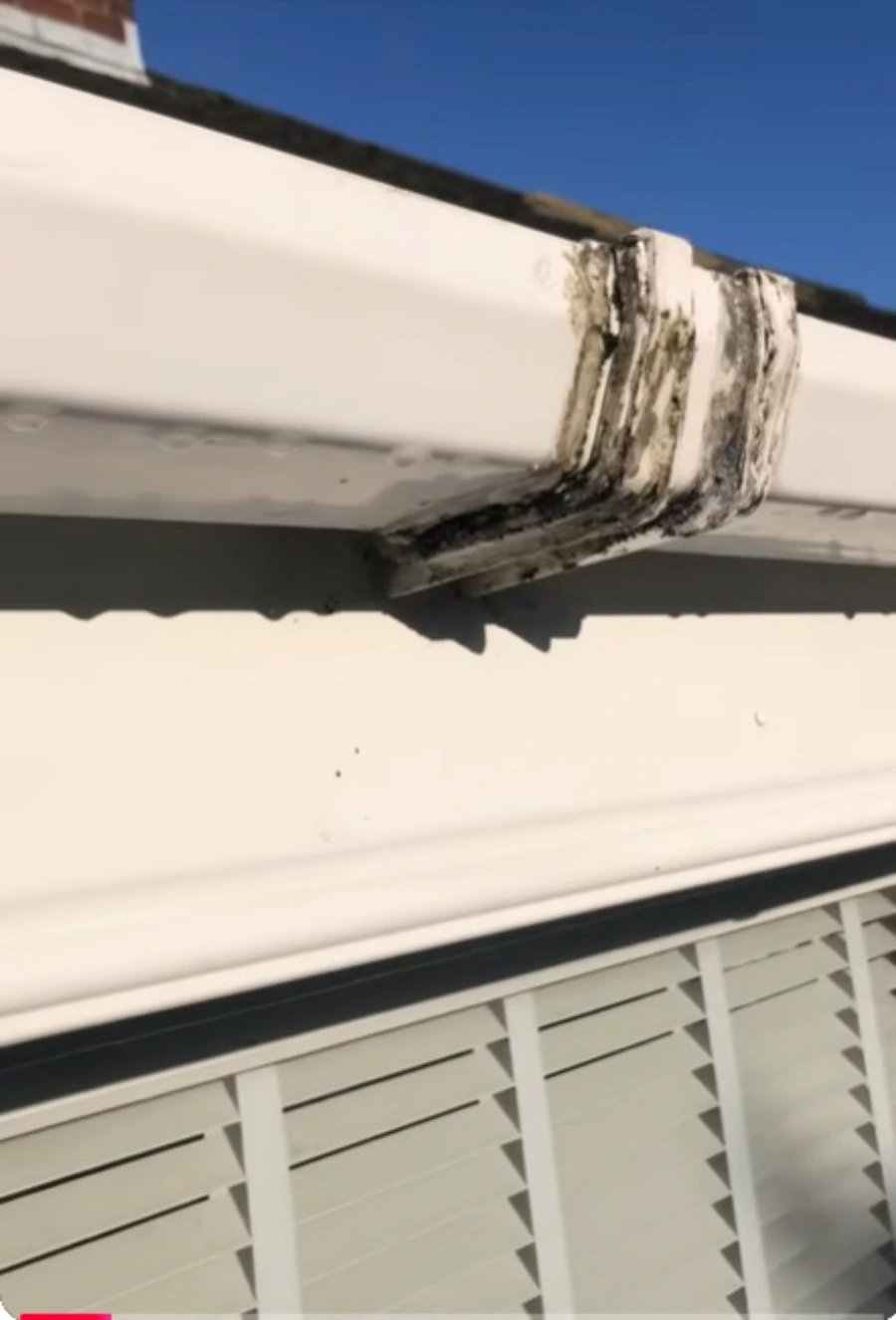
A gutter’s job is simple: carry water to the downspout without spilling a drop. So when you see drips falling from a seam or a wet streak on the fascia after rain, something has failed. The good news is that leaks almost always happen at predictable spots, and each spot has a straightforward fix. Here’s where Roseville gutters leak, why, and what to do about it.
1. Failed Seams and End Caps
Sectional gutters are joined every 10 feet or so, and each joint is sealed with caulk or sealant. Roseville’s 100°F+ summers bake that sealant until it shrinks and cracks — typically within 5–7 years. The first heavy rain of the season then pushes water through every cracked seam, and end caps fail the same way. You’ll recognize it: a steady drip from a joint during rain. The fix is to clean out the old sealant and apply commercial-grade gutter sealant rated for high heat — typically $95–$150 per joint.
2. Corner Miters
Inside and outside corners are the most complex joints in the system — two angled pieces meeting under constant thermal movement. They’re the first place sealant fails and the hardest place to reseal well, because water pools in the corner during heavy flow. If your leak is exactly at a corner, especially an inside corner below a roof valley, the miter seal has likely failed. Corners sometimes need new miter pieces rather than just fresh sealant, which is why a professional assessment matters here.
3. Holes and Corrosion Spots
Small holes start as pinholes — often where Valley Oak acorn caps sat against the aluminum holding moisture, or where standing water from a slope problem never drained. Aluminum doesn’t rust like steel, but it does corrode, and once a pinhole opens, water enlarges it with every rain. Holes under an inch can be patched with aluminum flashing and sealant ($125–$200); larger holes usually mean replacing that gutter section. If you’re seeing multiple holes along a run, the gutter is telling you its protective coating is done.
4. Loose Downspout Joints
Downspout sections connect at elbows and straight joints that expand and contract with Roseville’s temperature swings. Over time the connections loosen, and water under pressure from a partial clog above forces its way out through the gaps. You’ll see drips at the joints during rain — sometimes mistaken for a gutter leak when it’s really a downspout problem. Reconnecting and re-securing with stainless screws usually solves it in minutes.
5. Water Getting Behind the Gutter
Sometimes the “leak” isn’t in the gutter at all. When gutters clog and overflow, water runs down the back side and drips from behind the trough — soaking the fascia and appearing below as a leak. Drip edge failures cause the same symptom. If the gutter trough looks intact but water is dripping from behind it, check for clogs and drip edge gaps first: the real fix is a gutter cleaning in Roseville or flashing repair, not sealant.
How to Find Your Leak
Wait for rain — or have a helper run a hose on the roof — and watch from the ground:
- Mark each drip’s location. Seams and end caps drip at regular intervals along straight runs; corners drip at corners; downspout joints drip at the elbows.
- Check whether it drips only during rain (an active leak) or for hours after (trapped water draining from a low spot — a slope problem, not a leak).
- Look at the fascia. Water stains or soft wood behind a drip point mean the leak has been active a while and the wood may need repair too.
- Note the age. If your gutters are 7+ years old and multiple seams are dripping, sealant failure is systemic — resealing one joint at a time becomes whack-a-mole.
Do all of this from the ground. Ladder work and sealant application on the roofline are jobs for a professional — a fall from gutter height can cause serious injury.
When to Call a Professional
Most gutter leaks are quick professional repairs — and in Roseville most fall in the $75–$400 range (see current gutter service costs). A typical visit: find every leak with a water test, clean and reseal the failed joints, patch small holes, and re-secure loose downspout connections. If the fascia behind the leak is rotted, that’s repaired first — sealing a gutter to rotten wood is money wasted. The gutter repair professionals we connect you with water-test every repair before they leave, so you know it’s actually fixed.
Frequently Asked Questions
Can I seal a leaking gutter myself with caulk from the hardware store?
You can, but it rarely lasts. Standard silicone shrinks and cracks in Roseville’s summer heat — the same failure you’re trying to fix. Professionals use commercial-grade gutter sealants rated for 180°F+ and prep the surface properly. A DIY bead usually buys one season; a proper reseal buys years.
Why do my gutters only leak during heavy rain?
Light rain doesn’t build enough water depth to reach the failed seal — the leak only shows when the trough fills and water presses against the gap. It also means the seal has failed completely, not partially: plan the repair before the next big storm.
How long should gutter sealant last in Roseville?
Quality sealant properly applied lasts 5–10 years here; cheap caulk — or sealant applied over dirty, wet surfaces — can fail in one season. Our hot summers are the main enemy: UV and 100°F+ heat dry out lesser products fast.
Related guides: why gutters sag · water coming over your gutters · repair vs. replacement
Gutter Dripping Every Time It Rains?
Get a diagnosis and an upfront price — most services are scheduled within the same week.