Why Is Water Coming Over My Gutters?
Water coming over your gutters is different from overflowing: instead of spilling because the gutter is full, the water overshoots or bypasses the gutter entirely. The usual causes are roof valley volume (two roof planes dumping into one spot), gutters too small for the roof area, drip edge issues that let water run behind the gutter, or a steep roof pitch that sends water flying past the trough. The fix depends on which one you have — here’s how to tell.
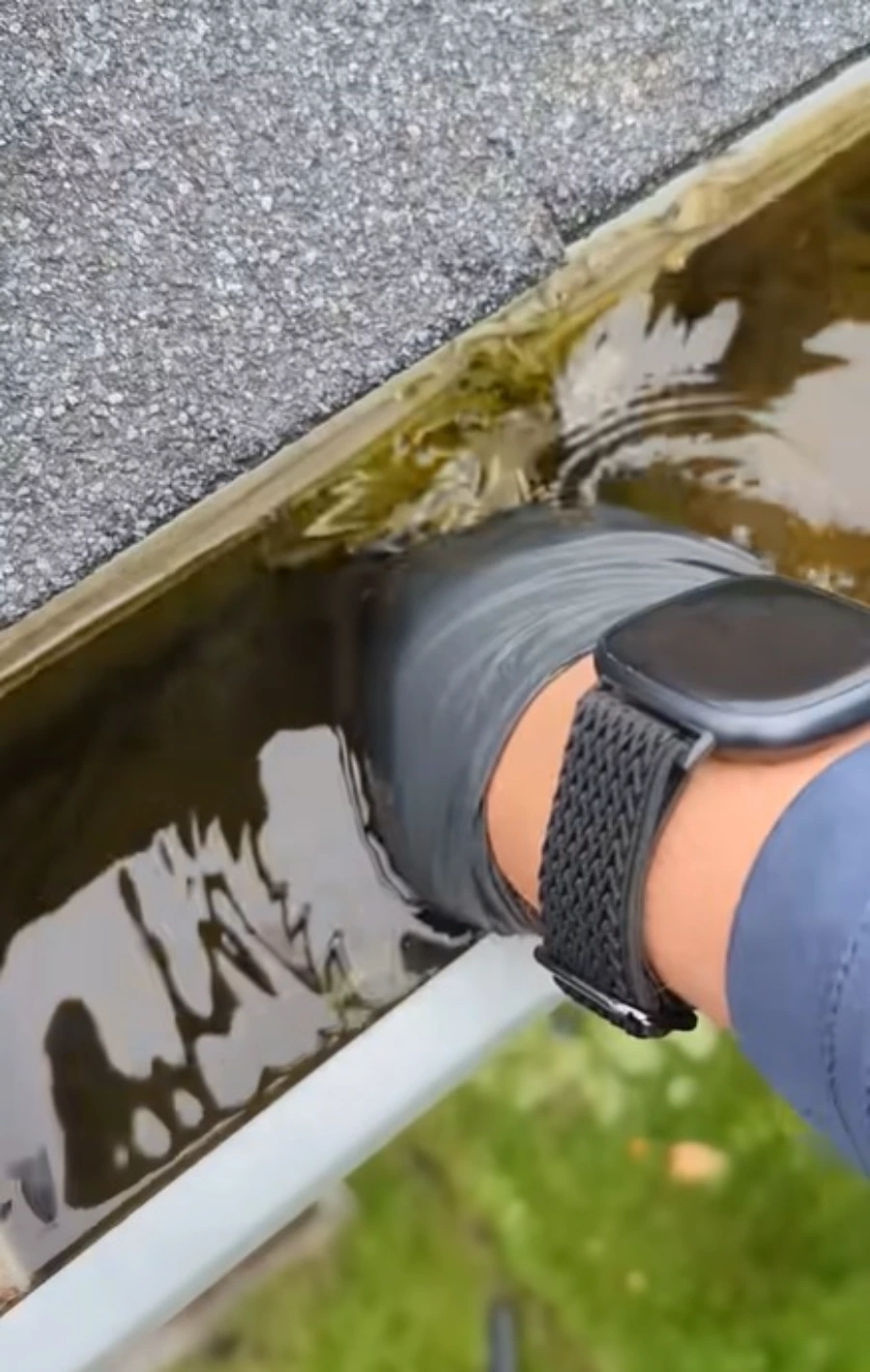
There’s an important difference between gutters that overflow and water that comes over the gutters. Overflowing means the trough filled up and spilled — usually a clog, bad slope, or blocked downspout. Water coming over the gutters means the water never really got into the trough at all: it shot past the front lip, poured behind the back edge, or overwhelmed one section in a torrent. The distinction matters because the fixes are completely different — cleaning won’t help if the water was never in the gutter to begin with.
1. Roof Valley Volume: Too Much Water, Too Fast
A roof valley — where two roof planes meet — concentrates runoff from a large area into a single narrow channel. During heavy rain, that channel can deliver more water to one 3-foot section of gutter than the entire rest of the run combined. In Roseville’s intense winter downpours, the volume simply overwhelms the trough at the valley exit, and water cascades over the front lip in a waterfall. If your problem happens at exactly one spot, directly below a valley, and only during heavy rain, this is almost certainly the cause. Fixes include a valley splash guard, an additional downspout near the valley, or upsizing that gutter section to 6-inch.
2. Gutters That Are Too Small for the Roof
Standard 5-inch gutters handle average rainfall on average roofs. But a large or steep roof section — common on two-story Roseville homes in Blue Oaks, Johnson Ranch, and Westpark — can shed water faster than a 5-inch trough can catch it, especially when the water arrives with speed. The symptom looks like overflow, but the trough is clean and the downspouts are clear: the water is simply arriving faster than the system can accept it. Upsizing to 6-inch gutters with 3×4-inch downspouts roughly doubles capacity and is the lasting fix.
3. Drip Edge Problems: Water Missing the Gutter Entirely
The drip edge is the metal flashing along the roof’s edge that’s supposed to guide water into the gutter. If it’s missing, bent, or installed behind the gutter’s back edge instead of over it, water runs down the fascia and behind the gutter — looking like it’s “coming over” when it’s actually bypassing the system entirely. This is common on older Roseville roofs in Maidu and Diamond Oaks, where the original drip edge has corroded or was never installed. Look for water stains on the fascia board or water dripping behind the gutter during rain: that’s the tell. The fix is a gutter repair visit to correct or replace the drip edge flashing.
4. Steep Roof Pitch and High Velocity
Water moves faster down a steep roof. On steeper pitches, rain can hit the gutter with enough velocity to shoot straight over the front lip — especially at inside corners and where the roof slope aims directly at the gutter. You can recognize this by the pattern: clean gutters, clear downspouts, but water arcing past the trough during heavy rain. A slightly wider gutter or a splash guard at the impact point usually solves it.
Overflowing vs. Coming Over: How to Tell the Difference
Watch during the next rain and ask three questions:
- Where? Overflow from a full gutter usually spans a whole run; water coming over hits one spot — below a valley, at a corner, or where the roof is steepest.
- When? Overflow from clogs happens in any steady rain; overshoot problems appear mainly in heavy downpours when volume and velocity peak.
- What’s in the trough? If the gutter is clean and downspouts flow freely yet water still comes over, you’re looking at volume, size, or drip edge — not a blockage.
Get this distinction right before spending money. A gutter cleaning in Roseville ($149–$449 — see current costs) fixes overflow, but only capacity or flashing changes fix water that was never in the gutter.
When to Call a Professional
If water is bypassing your gutters, the fix is hands-on: splash guards, an added downspout, upsizing to 6-inch trough, or drip edge correction. These are quick professional jobs — the local gutter repair professionals we connect you with will watch the water path (or review a video of it) and quote the fix upfront. Most services are scheduled within the same week, so the next storm doesn’t have to mean another waterfall.
Frequently Asked Questions
What’s the difference between overflowing gutters and water coming over them?
Overflowing means the trough filled and spilled — usually a clog, slope, or downspout problem. Water coming over means the water bypassed or overshot the trough — valley volume, undersized gutters, drip edge gaps, or steep-pitch velocity. Cleaning fixes the first; only capacity or flashing work fixes the second.
Can a splash guard really fix valley overflow?
Often, yes. A valley splash guard is a small angled flashing installed at the valley exit that deflects the concentrated stream down into the trough instead of letting it shoot over the lip. It’s one of the simplest and most cost-effective gutter fixes.
How do I know if my drip edge is the problem?
Look for water running behind the gutter or staining on the fascia board during rain. If the gutter itself stays relatively dry while the fascia gets soaked, water is bypassing the system — the classic sign of drip edge failure.
Related guides: why gutters overflow · how to tell if a downspout is clogged · how often gutters should be cleaned
Water Shooting Past Your Gutters?
Get a diagnosis and an upfront price — most services are scheduled within the same week.